

Distortion Of The Mind

+ + + Your brain may be experiencing serious deterioration. Immediate attention is required. + + +
Congratulations! You are the $/%TH user to visit this page!
As a result, you have been chosen to take part in our annual curiosity examination.

You will be subjected to a series of thought experiments designed to awaken a rejected part of you. In order to achieve accurate results, you must remain honest and conscious throughout the entirety of the test. If you feel the urge to leave the webpage at any point during the experiment, know that this feeling is natural and intentional.

[Do not disengage beyond this point.]
>>> TEST IN PROGRESS...
Consider the following:
+ Inability to concentrate for extended periods of time
+ Emotional withdrawal
+ Cognitive decay and lack of critical thinking
+ Mental confusion and obstruction of thought
+ Trouble recalling information
If you experience these symptoms, your brain may be in an active state of deterioration, a condition known as:
“brainrot.”
You must be familiar with the term. “Brainrot” refers not to literal rot spreading inside your skull, as that would be a cause for serious medical concern, but instead to the deterioration of mental and intellectual capabilities as the result of overconsumption of material considered to be unchallenging and trivial. In simpler words: TikTok, Instagram Reels, and YouTube Shorts.
[There is no need for concern as long as you remain aware of your current situation. A cure has been found. Remain calm and proceed with the test.]“There is no harm in watching silly videos on the internet and engaging with the community online,” you may argue. We agree that the advancement of technology is beneficial and has brought humanity beyond what we thought possible just a century ago. Due to the decline of social contact that we experienced in mandatory long-term isolation, online engagement was the remedy for loneliness and a healthy way to maintain emotional stability. The internet is also a great source of information that would have otherwise been inaccessible.

Think of the last video you watched. Do you remember? If so, what did it bring into your life? How did it engage with your mind? Was it worthwhile? If your answers amount to nothing, you may want to reconsider your media intake.
“Repeated exposure to highly stimulating, fast-paced content may contribute to habituation, in which users become desensitized to slower, more effortful cognitive tasks such as reading, problem solving, or deep learning. This process may gradually reduce cognitive endurance and weaken the brain’s ability to sustain attention on a single task,” claims the American Psychological Association (APA)[1] which further states: “Frequent SFV (short-form video) use may diminish attentional control and reduce the capacity for sustained cognitive engagement, as cognitive processing becomes increasingly oriented toward brief, high-reward interactions rather than extended, goal-directed tasks.”
Materials which do not contribute to our personal agenda and by extent do not engage our brains in a meaningful way instead fill them with unretainable, redundant information. This superfluous substance results in so-called “brain fog,” characterized by slowed thinking processes, mental fatigue, and confusion, as if our thoughts were obscured by a thick mist of nonsense in which we get lost in our attempt to form a logical conclusion.*
Particularly exposure to synthetic media through generative AI (also considered “AI slop”) as well as so-called “junk” and “sludge” content like reaction videos, split-screens, and other entertainment media which offer a negative impact on mental engagement, sabotage our critical thinking skills by overfilling our brains with “fodder”, much like “junk” food fills us with virtually empty calories, all for the sake of instant gratification through the rapid dosing of dopamine at the cost of mental capacity.
Consider the following:
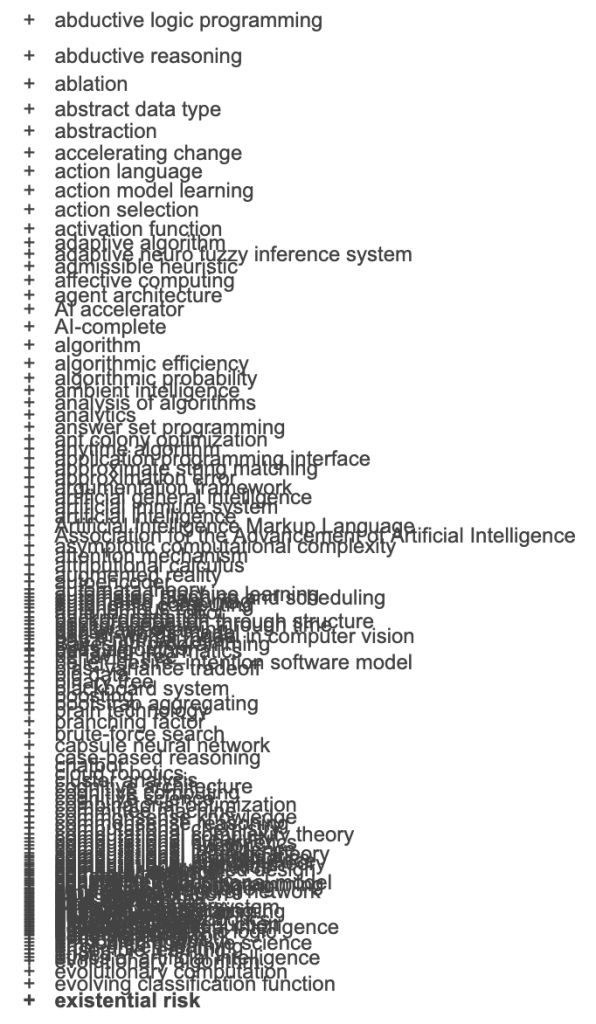
[Are you sure that you are safe?]
In order to “unclog” your synapses to allow for uninterrupted flow of thought, consider how your brain functions when the consumption of media is tailored not through algorithms[3] but instead through your own conscious decisions.[4]
Pick a topic that you would like to learn about — an area of expertise that you feel is beneficial to your overall wellbeing. Rearranging your digital environment in order to suit your personal needs surrounds you with information that you are more likely to engage with. Specific, goal-oriented consumption can greatly reduce overflow and instead replace the “static” with intentional and productive knowledge.
Even potentially useful media can deteriorate our mental capabilities when consumed in the incorrect way.
We recommend conducting regular self-examination and maintenance in the form of a ritual called “digital detoxication.” It is not necessarily the complete rejection of technology (although even this extreme measure is recommended once in a while) but can be adjusted based on your specific needs by eliminating unnecessary digital “clutter,” for example by limiting media use to pure necessities as well as by replacing electronic applications with analogue alternatives, like watches, notebooks, calendars, and libraries.
Train your memory by purposefully recalling information. While your brain is an organ, it fundamentally functions like a muscle — the more you use it, the stronger it becomes. Next time you feel the urge to check notes on your phone, stay patient and try to remember. That way you strengthen neural connections and retain information by slotting it into your long-term memory.
In order to think faster, first you must slow down. Reduce noise, challenge your mind, and choose your content with intention.
>>> TEST COMPLETE.
Result:
[Short-form “content” tires your brain. Your goal is to live. Decelerate, detoxicate, engage. Curiosity is the cure to brainrot.]
Oliwia Schweigstill
___
* While the overconsumption of trivial media is not the only cause for “brain fog,”[2] this condition is nevertheless a further symptom of “brainrot.”
[1] Feeds, Feelings, and Focus: A Systematic Review and Meta-Analysis Examining the Cognitive and Mental Health Correlates of Short-Form Video Use
https://psycnet.apa.org/fulltext/2026-89350-001.pdf
[2] Brain Fog: Causes, Symptoms, Treatment, Exercises, Remedies & Prevention https://myhealthopedia.com/brain-fog-causes-symptoms-treatment-exercises
[3] see also: “Algorithmen” by Valerija Spolwind[4] How to think 10x faster than anyone
https://www.youtube.com/watch?v=4gJs9ot-Y3k
Gestaltung: Oliwia Schweigstill